




The majority of adverse reactions were mild or moderate1
TARPEYO has an established safety profile2
Adverse reactions occurring in ≥5% of patients treated with TARPEYO + RASi and ≥2% higher than patients treated with RASi alone1*
| Adverse reaction | TARPEYO + RASi (n=195), n (%) |
RASi alone (n=194), n (%) |
|---|---|---|
| Peripheral edema | 33 (17) | 10 (5) |
| Hypertension | 23 (12) | 6 (3) |
| Muscle spasms | 23 (12) | 8 (4) |
| Acne | 22 (11) | 2 (1) |
| Headache | 19 (10) | 14 (7) |
| Upper respiratory tract infection | 16 (8) | 12 (6) |
| Face edema | 15 (8) | 1 (0.5) |
| Weight increased | 13 (7) | 6 (3) |
| Dyspepsia | 13 (7) | 4 (2) |
| Dermatitis | 12 (6) | 2 (1) |
| Arthralgia | 12 (6) | 4 (2) |
| White blood cell count increased | 11 (6) | 1 (0.5) |
- Low discontinuation rate due to adverse reactions: <10% of patients treated with TARPEYO + RASi discontinued due to TEAEs (9% vs 2%)2*
- Most adverse reactions occurring at a greater incidence in the TARPEYO + RASi group were consistent with hypercortisolism and resolved within 3 months after discontinuation1
- Incidence of TESAEs with TARPEYO + RASi vs RASi alone was 9% vs 5%2*
- Common steroid-specific TEAEs developed at a mean of 4 months following treatment initiation, and generally resolved following treatment cessation2
*Safety updated based on NefIgArd Safety Analysis Set, which included data from all patients who received ≥1 dose of study drug. In the global study, an additional 29 patients were enrolled in China for regulatory requirements after global recruitment had ended. ADRs or ARs were reported in the placebo-controlled, 9-month treatment period until 14 days after completion of the tapering period.2

FDA-required REMS program or vaccine requirements1
Clinical events of interest for systemic corticosteroids were generally limited1,2
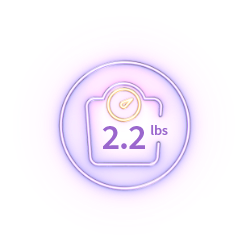
Median weight gain did not exceed 2.2 lbs2
TARPEYO + RASi median change in body weight
- Median change in body weight from baseline did not exceed 2.2 lbs and returned to baseline within 3 months after the end of treatment

Changes in blood pressure or HbA1c during treatment generally resolved after the end of treatment2
- Median changes in systolic and diastolic blood pressure were small and resolved to baseline levels within 3 months after the end of treatment. Median changes in systolic and diastolic blood pressure were small with no clinically relevant differences (<6 mmHg)
- HbA1c was generally unchanged throughout treatment. Increases in HbA1c observed during treatment generally resolved after the end of treatment*

Incidence of infections was comparable between treatment groups
- Incidence of infections was comparable between treatment groups: TARPEYO + RASi (37.4%) vs RASi alone (33.5%)2
- Low rates of severe infections requiring hospitalization: 3 (1.5%) TARPEYO + RASi vs 1 (0.5%) RASi alone2,3
*A small numerical increase in median HbA1c levels was observed during TARPEYO treatment, with some outliers evident. Increases occurred in a few TARPEYO-treated patients with a diabetes diagnosis pre-enrollment or with baseline values indicative of prediabetes per ADA-defined thresholds (HbA1c 5.7% or FBG 100 mg/dL).2
ADA=American Diabetes Association; ADR=adverse drug reaction; AR=adverse reaction; FDA=Food and Drug Administration; HbA1c=hemoglobin A1c; KDIGO=Kidney Disease: Improving Global Outcomes; RASi=renin-angiotensin system inhibitor; REMS=Risk Evaluation and Mitigation Strategy; TEAE=treatment-emergent adverse event; TESAE=treatment-emergent serious adverse event.
REFERENCES: 1. TARPEYO. Prescribing Information. Calliditas Therapeutics AB; June 2024. 2. Data on file. Calliditas Therapeutics AB. 3. Lafayette R, Kristensen J, Stone A, et al. Efficacy and safety of a targeted-release formulation of budesonide in patients with primary IgA nephropathy (NefIgArd): 2-year results from a randomized phase 3 trial. Lancet. 2023;402(10405):825-936. http://doi.org/10.1016/S0140-6736(23)01554-4